
Navigating Market Volatility: Insights from the Investment Committee
Summary
The current market environment is marked by significant volatility, largely due to recent tariff announcements and escalating trade tensions. Investors are advised to adopt a disciplined approach, focusing on risk management and strategic investment strategies. Historical context is crucial for understanding market dynamics, and investors should prioritize liquidity and cash reserves to capitalize on potential buying opportunities.
Key Points
Market Volatility and Tariffs: Recent tariff announcements have led to heightened market volatility, with global stock markets experiencing substantial declines. This volatility is driven by concerns over trade wars and potential economic recession.
Investment Strategies:
Dollar Cost Averaging: This strategy helps mitigate market volatility by investing a fixed amount of money at regular intervals, regardless of market conditions.
Risk Management: Prioritize liquidity and risk management to navigate uncertain markets effectively.
Safe Havens: Investors are advised to focus on cash and gold as safe havens during turbulent times.
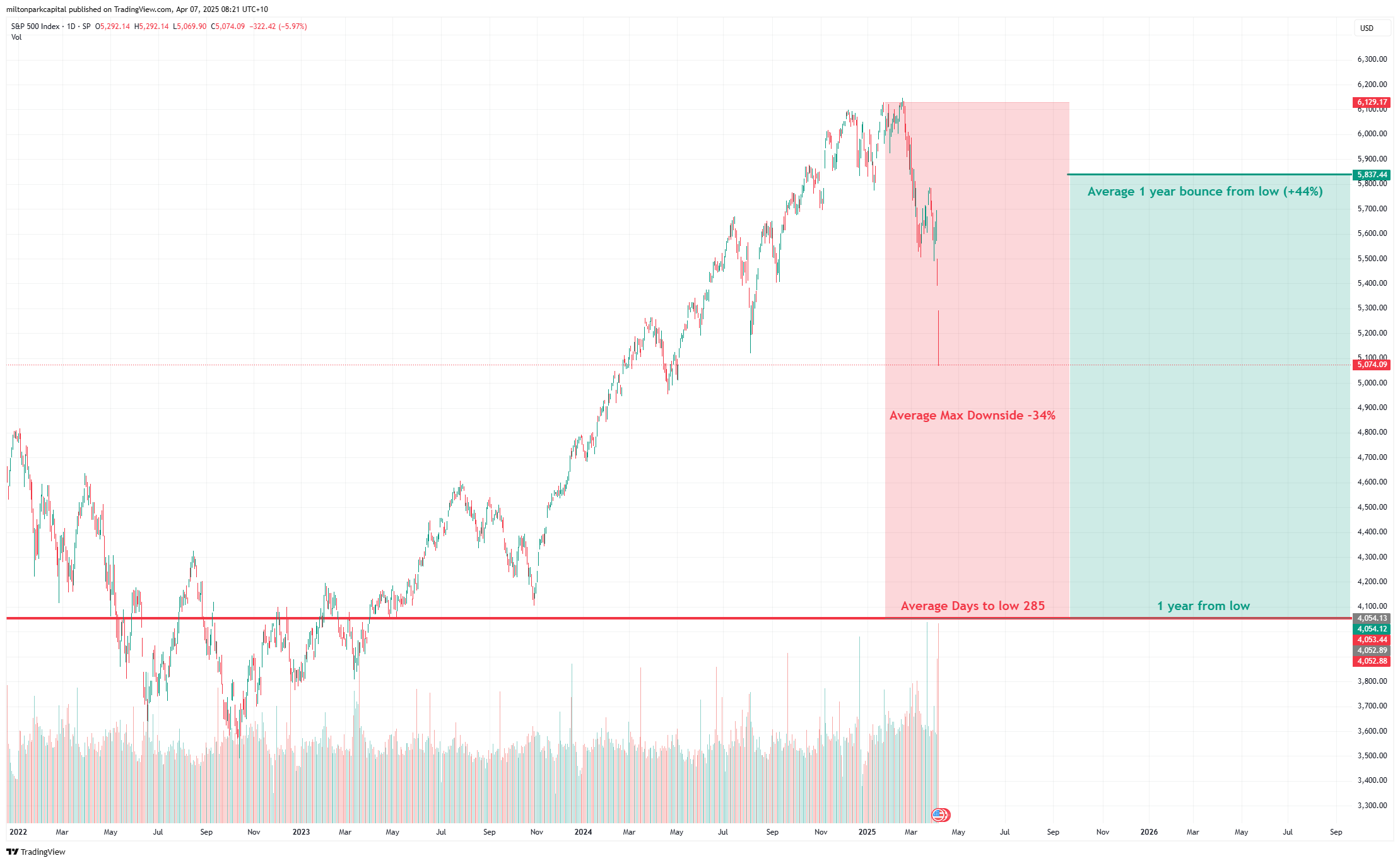
Historical Context: Understanding historical market patterns is essential for making informed investment decisions. Previous trade wars have caused sharp pullbacks, but markets often recover over time.
Bond Yields and Stock Market Dynamics: Bond yields are significantly impacting market dynamics, with investors shifting from equities to bonds amid uncertainty. The broader market has retraced to previous levels, indicating ongoing volatility.
US vs. Australian Market: The US market is experiencing a more severe downturn compared to Australia, with defensive stocks showing resilience in the current climate.
Market Predictions: There are potential buying opportunities in the near future, but investors should be cautious of market traps and speculative theories.
Cash Reserves: Maintaining cash reserves is essential for taking advantage of market dips and capitalizing on future opportunities.

Takeaways
Volatility and Tariffs: The market is experiencing significant volatility due to recent tariff announcements.
Investment Approach: Focus on cash and gold as safe havens, and prioritize liquidity and risk management.
Dollar Cost Averaging: This strategy is recommended in uncertain markets.
Pre-planned Strategy: Having a pre-planned investment strategy helps avoid emotional decision-making.
Small Caps Vulnerability: Small caps are particularly vulnerable in the current market environment.
Market Recoveries: Recoveries can be aggressive, making timing difficult.
Economic Indicators: Understanding economic indicators is essential for making informed investment decisions.
Bond Yields Impact: Bond yields are significantly impacting market dynamics.
Defensive Stocks: Defensive stocks are showing resilience in the current climate.
Cautious Approach: Investors should adopt a cautious approach to investing, focusing on planning and patience.


Dollar Cost Averaging and Long-Term Perspective
The webinar stressed the importance of adopting a long-term perspective and employing strategies like dollar cost averaging. This approach involves investing a fixed amount of money at regular intervals, regardless of market conditions, to reduce the impact of volatility.
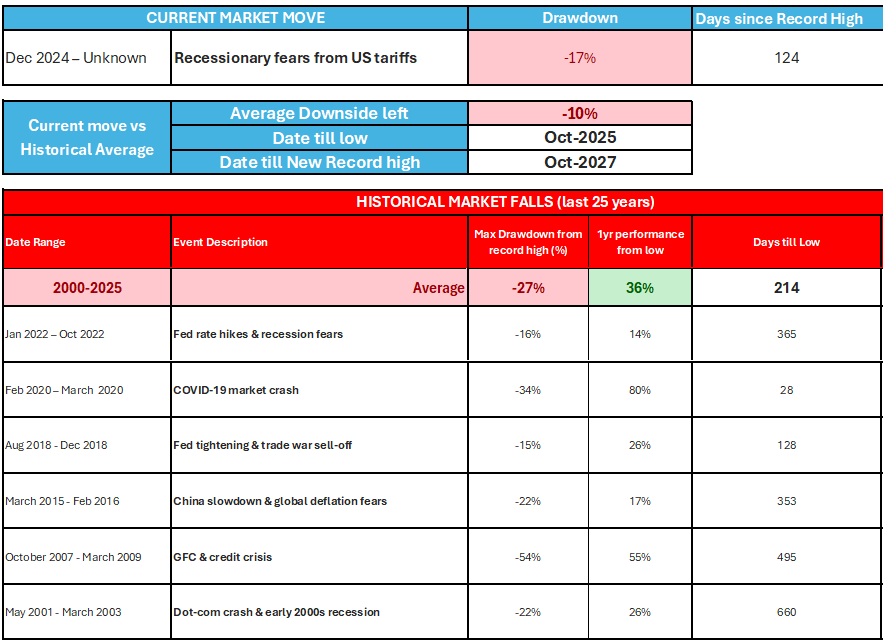
Historical data was cited to illustrate that markets often recover over time. For instance, following significant downturns, such as the COVID-19 pandemic and the Global Financial Crisis, markets have typically rebounded strongly. The team suggested that investors should focus on historical averages and not be deterred by short-term fluctuations.

Disclaimer: The recommendation given is general advice only. It does not take into account your personal objectives, financial situation, or specific needs. This information should not be your sole resource when making such decisions. We strongly recommend you to seek the advice of financial, taxation, and legal professionals before finalising any investment decisions.