

Bessent's Bond Blitz: Treasury Doubles Long-End Buybacks
Wall Street staged a rebound on Wednesday after the US Treasury made a bold move to stem a punishing sell-off in longer-dated bonds. Treasury Secretary Scott Bessent announced at least a doubling of buyback operation sizes for securities in the 10-year to 30-year sector, effective September 9, increasing from $2 billion to at least $4 billion per operation.
The intervention sent the 30-year yield tumbling 10 basis points to 5.18%, a day after it had hit 5.34% — its highest level since June 2007. The benchmark 10-year yield also fell roughly 7 basis points to 4.65%. The move amounts to a modern version of the Fed's "Operation Twist," effectively replacing longer-dated debt with shorter-term securities to relieve pressure on the long end of the curve.
Buybacks for both the 10-to-20-year and 20-to-30-year sectors will double to $4 billion per operation. Three more buybacks of 20-to-30-year bonds and four of 10-to-20-year securities are scheduled between now and November 5, adding at least $14 billion of additional liquidity support.
"This is more of a band-aid than a panacea," said Lawrence Gillum at LPL Financial. "But it is a reminder that the Treasury Department is paying attention and will do whatever it can to keep yields from getting too high too quickly."
Krishna Guha at Evercore noted the intervention could "force some near-term short-covering while discouraging investors from going max short in the future for fear of being ambushed again." However, he cautioned the operation changes almost nothing in terms of fundamentals, and the increased size is modest relative to the $32.2 trillion Treasury debt market.
Thomas Simons, chief US economist at Jefferies, said the surprise announcement upends the Treasury's tradition of "regular and predictable" debt issuance, adding that the move feels "shot from the hip." Rene Albrecht at DZ Bank pointed to the political dimension: "It's only three months until the midterm elections."
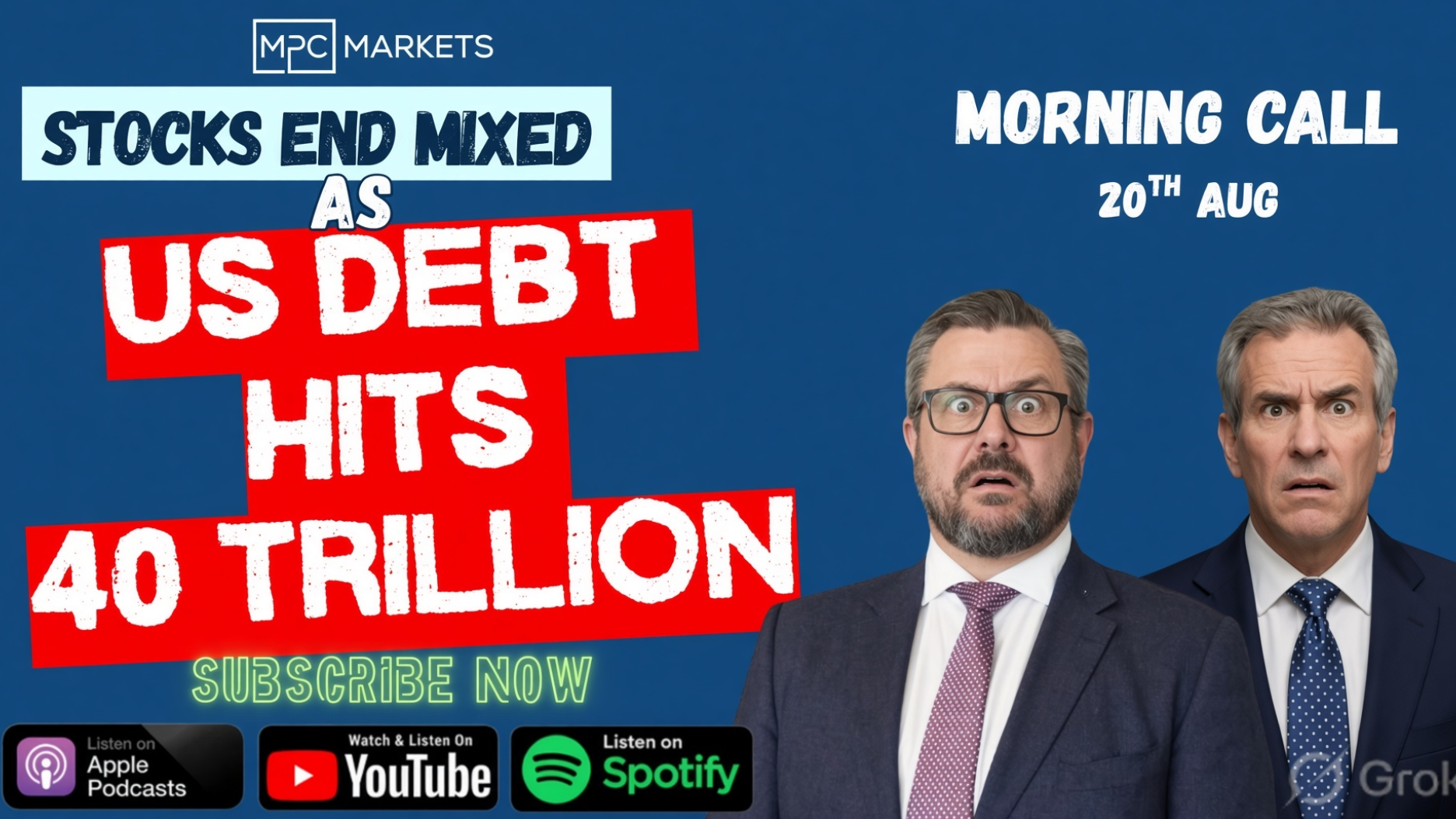
$40 Trillion and Counting: US Debt Crosses a Grim Milestone
Total US public debt surpassed $40 trillion for the first time on Tuesday, the Treasury Department confirmed, having more than doubled in less than a decade. The milestone arrived less than five months after debt reached $39 trillion, underscoring the accelerating pace of federal borrowing.
The government's interest costs have now eclipsed Medicare healthcare outlays to become the second-largest federal budget line item, behind Social Security. Rolling 12-month interest costs have exceeded $1 trillion since early 2024 and are still climbing — up 15% year-on-year in the first ten months of fiscal 2026 to $1.17 trillion.
As buyers demand higher yields, borrowing costs rise, which in turn drives up the Treasury's borrowing needs. This self-reinforcing pattern — known as a "doom loop" — is what fiscal watchdogs and analysts are increasingly warning about. The government is now approaching the statutory debt ceiling of $41.1 trillion, expected to be reached in mid-2027.
"Forty trillion dollars of debt doesn't exist solely on the government's ledgers; it is felt throughout the economy and finds its way to the pocketbooks of people one way or another," said Maya MacGuineas of the Committee for a Responsible Federal Budget.
Douglas Holtz-Eakin, president of the American Action Forum, was blunter: "The federal budget is the enemy within. It is the greatest threat to the foundations of economic progress, US international economic standing, and national security."
Fed Minutes Reveal Rate-Hike Hawks Circling
Minutes from the Federal Reserve's July 28–29 meeting revealed several officials favoured a rate hike last month, while many indicated tightening would be necessary if inflation didn't decline. The FOMC voted 9–3 to hold rates steady at 3.5%–3.75%, with Dallas Fed President Lorie Logan, Cleveland's Beth Hammack, and Minneapolis chief Neel Kashkari dissenting in favour of a 25-basis-point increase.
Officials described inflation outlooks as "highly uncertain" and noted that the re-escalation of the Middle East conflict "significantly clouded the inflation outlook." Many participants flagged the possibility that inflation might prove more persistently elevated than expected.
Fed Chairman Kevin Warsh was roundly criticised for his post-meeting press conference, where he failed to articulate a clear rationale for holding rates and suggested the FOMC's 2% inflation target could be altered in January. The minutes also revealed Warsh floated reducing annual policy meetings from eight to six.
Since the July meeting, however, data has pointed to slowing economic activity — retail sales fell by the most in over a year, and employers unexpectedly cut jobs. Pricing in fed funds futures as of Wednesday implied about a 36% chance of a September rate increase, down from over 70% at end-July.
Moderna Rockets 177% on Cancer Vaccine Triumph; Marvell Inks Google Deal
The standout corporate story was Moderna, whose shares surged 177% — their best day on record — after the company and partner Merck announced that their personalised mRNA cancer vaccine, intismeran, succeeded in a late-stage melanoma trial. Combined with Merck's blockbuster immunotherapy drug Keytruda, the vaccine reduced the risk of recurrence and spread of the deadliest form of skin cancer. Merck climbed nearly 13% to an all-time high.
The result is central to Moderna's effort to prove mRNA technology can succeed beyond COVID-19 vaccines. The Nasdaq biotech index rose 4.4% to a fresh record, while BioNTech surged 22% and Novavax gained 6% in sympathy. Short sellers in Moderna faced record one-day losses, with short interest standing at 13.5% of the free float.
Marvell Technology shares jumped nearly 10% after it announced an expanded custom chip partnership with Alphabet's Google. Under the agreement, Marvell will develop AI inference accelerators, storage, networking, and near-memory computing technologies. Google received a warrant to buy up to 59 million Marvell shares at $206.58. Stifel estimates the deal could represent up to $120 billion in cumulative revenue over roughly six-and-a-half years.
Elsewhere in earnings, Target lifted its full-year guidance after results outpaced estimates, gaining 4.3%, while Estée Lauder beat estimates and ended three straight years of annual revenue declines. Lowe's edged up 2.3% despite trimming full-year revenue guidance. On the chipmaker front, the Philadelphia Semiconductor Index fell more than 2%, extending a broader growth-stock retreat amid elevated bond yields.

The ASX is set to edge modestly higher, with futures up 27 points (+0.3%) to 9,034. The Aussie dollar firmed 0.65% to US$0.7124 as the greenback weakened broadly. Gold surged past US$4,500 — up over 4% — while the VIX dropped nearly 6% to 14.91.
On the domestic front, all eyes are on the July employment report at 11:30 AEST, with forecasts for 11,700 new jobs and unemployment steady at 4.4%. RBA Deputy Governor Hauser yesterday warned the bank will raise rates if upside inflation risks materialise.
Heavyweight ASX earnings continue to roll in today:
- Goodman Group (GMG) and Fortescue (FMG) report after market — two of the biggest names in reporting season.
- Northern Star Resources (NST) reports at 10:00 AEST — watch for cost guidance as gold pushes to new highs.
- Brambles (BXB) and Medibank Private (MPL) also report today, along with Sonic Healthcare, APA Group, Codan, and Vicinity Centres.
In the US tonight, watch for the Philly Fed Manufacturing Index (f/c 24.1 vs 41.4 prior) and weekly Unemployment Claims (f/c 210K) at 10:30pm AEST. The US–Iran stalemate over the Strait of Hormuz remains the key geopolitical wildcard for energy markets.