Positive Investment Thesis on Uranium: The Nuclear Renaissance and Data Center Demand
The investment case for uranium is more compelling than at any point in recent history, driven by a convergence of structural supply deficits, resurgent nuclear energy policy, and a dramatic shift in demand from the world’s largest technology companies—the so-called “Magnificent Seven” (MAG7)—as they race to secure clean, reliable power for their rapidly expanding AI and cloud data centers.
Key Drivers of the Bullish Uranium Thesis
- Structural Supply Deficit
Global uranium demand is projected to grow 240% by 2040, while no major new mines are scheduled to come online before 2030, creating a persistent supply shortfall169. Current annual production is falling short by 30–70 million pounds, and even with mine restarts, the market is expected to remain undersupplied for years269. This imbalance is further exacerbated by declining secondary supplies and geopolitical disruptions, such as the West moving away from Russian enrichment and Kazakhstan’s output increasingly flowing to China and Russia16. - Nuclear’s Role in the Clean Energy Transition
Nuclear energy is increasingly recognized as essential for delivering reliable, carbon-free baseload power. Governments and corporations are prioritizing nuclear to meet net-zero targets, with bipartisan support for new reactors, plant life extensions, and restarts of previously shuttered facilities6711. The International Energy Agency projects global electricity demand will rise 169% by 2050, with nuclear poised to generate a record level of electricity by 20259. - The Data Center and AI Revolution: MAG7 Moves
The explosive growth of AI and cloud computing is transforming the power landscape. Data centers are among the fastest-growing sources of electricity demand—US data centers alone could consume over 9% of the country’s electricity by 203010.
The MAG7—Alphabet (Google), Amazon, Apple, Meta, Microsoft, NVIDIA, and Tesla—are now turning to nuclear power as a cornerstone of their energy strategies:- Meta has signed a 20-year agreement to purchase 1.1 GW of nuclear power for its AI data centers, with plans to expand to 1–4 GW by the early 2030s58.
- Google is partnering with Kairos Power to develop multiple small modular reactors (SMRs) for its data centers34.
- Amazon has invested $500 million in X-energy and is targeting 5 GW of nuclear capacity for its operations34.
- Microsoft is backing the restart of the Three Mile Island nuclear plant and has signed major nuclear power purchase agreements3410.
- Oracle and other hyperscalers are planning gigawatt-scale SMR-powered data centers4.
These moves are not just about sustainability—they are about securing reliable, scalable, and emissions-free power to support the next wave of technological growth.
- Accelerating Term Contracting and Utility Demand
Utilities are locking in long-term uranium supply at elevated prices—term contracts are being signed with $79/lb floors and $150/lb ceilings, reflecting confidence in higher future pricing as utilities seek to reduce their Russian exposure and secure fuel for new and existing reactors6. - Scarcity of Tier-One Uranium Assets
There are very few large, high-quality uranium projects in stable jurisdictions. This scarcity, combined with the slow pace of new mine development and permitting, means that existing producers and advanced developers are uniquely positioned to benefit from rising prices and contracting activity16.
Why Uranium Now?
“The data centre players have experimented with carbon credits and renewables but it seems clear they are not the answer hence the recent nuclear deals from Microsoft, Amazon, Google et al… The industry drivers, particularly data centre and AI-driven electricity demand, point to a bullish future for nuclear power and uranium.”10
- Under-Owned by Investors: Despite the AI boom, uranium equities and physical uranium remain under-owned relative to their strategic importance in the global energy transition11.
- Price Upside: With demand outstripping supply and utilities forced to pay “at any cost” to keep reactors running, uranium prices are expected to remain strong and could move dramatically higher as the supply gap widens11.
Why Buy Boss Energy
Pure-play uranium exposure amid a structurally bullish market (reactor restarts, supply constraints).
Low-cost, high-margin production with ramp-up underway at Honeymoon.
Upside from Alta Mesa JV adds diversification and near-term growth.
Debt-free balance sheet, strong cash position, and spot market leverage (85% uncontracted inventory).
Scalable resource base (71.6M lbs U₃O₈) supports multi-year growth.
Business Segments
Production: $47.8m revenue (H1 FY25, +100% YoY)
Quarterly: $23.4m (Sep) → $25.2m (Dec)
Exploration: $1.6m (Dec), $1.2m (Mar); early-stage resource work
Development: $12.5m (Dec), $13.6m (Mar); Honeymoon & Alta Mesa build-out
Financials
Revenue: $47.8m
Loss after tax: $(9.5)m (vs $57.6m prior year profit)
Operating cash inflow: US$22.4m (150,000 lbs @ US$83.5/lb)
Cash & liquid assets: $229.2m
Free cash flow positive; NTA: $1.23/share
No debt
Operations
Honeymoon:
Mar Q production: 295,819 lbs (+116% QoQ)
Record month: 123,188 lbs
IX recovery: 95.5%; C1: A$33/lb
Alta Mesa (30%):
Production: 98,000 lbs (100% basis)
Resources: 3.41M lbs (M&I), 16.79M lbs (inferred)
749 holes drilled; ramp-up in progress
Guidance (FY25)
Full-year production: 850,000 lbs
2H FY25: 625,000 lbs
Cost guidance:
Fixed A$22–24/lb
Total A$37–41/lb
Capex: A$38–43m (Wellfields A$17–20m, Projects A$19–21m)
Total U₃O₈ resources: 71.6M lbs
Trade Plan
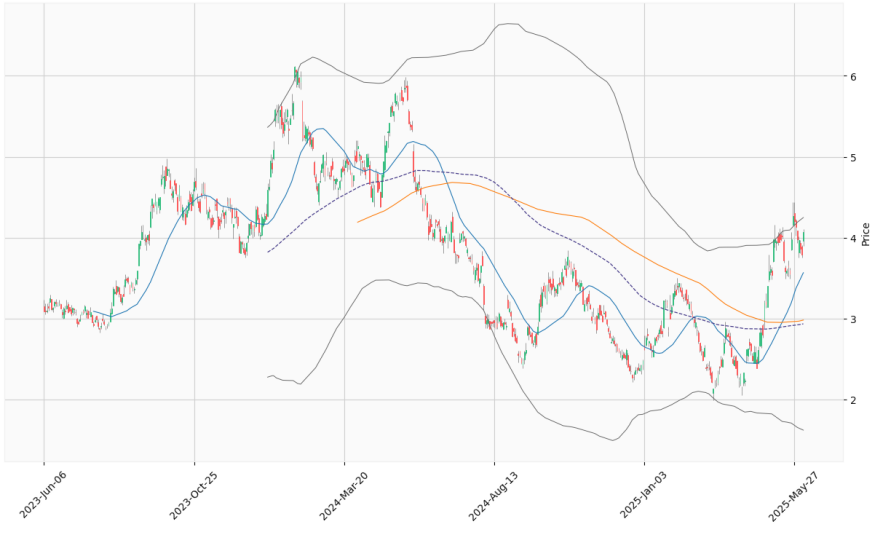
Buy Boss Energy (BOE) up to $4.1. Set a stop loss around $2.50 to limit downside risk below key support. The upside target is a retest of the previous high near $6.00.
Disclaimer: The recommendation given is general advice only. It does not take into account your personal objectives, financial situation, or specific needs. This information should not be your sole resource when making such decisions. We strongly recommend you to seek the advice of financial, taxation, and legal professionals before finalising any investment decisions.