
Tetratherix (ASX: TTX): Helping the Body Heal Itself — and Why It Could Be a Big Winner for Investors
Tetratherix is an Australian biotech company with a simple but powerful mission: help the body heal itself. The company has developed an advanced gel technology called Tetramatrix—and while that might sound high-tech, the idea behind it is easy to understand.
Think of Tetramatrix like a liquid bandage that goes much deeper. When doctors inject it into the body, it turns into a soft 3D structure—almost like a sponge or Lego blocks that fit together—right where it’s needed. This structure supports the damaged area, sticks to nearby tissue, and creates the perfect environment for the body to start repairing itself, whether it’s rebuilding bone, cartilage, or other tissue.
One of the most exciting parts of this technology is how smart it is. The body doesn’t react negatively to Tetramatrix. Instead, it accepts it, uses it to heal, and then naturally breaks it down and gets rid of it once it’s no longer needed. No scarring, no toxic reaction—just clean, efficient healing.
Tetramatrix can also be used during cancer treatments to protect healthy tissue. For example, it can create a small space around organs so that radiation only hits the tumor, not the organs nearby.
Why This Matters
This kind of “smart gel” is a game-changer in many areas of medicine—especially in surgeries and treatments where tissue damage is a problem. Think dental surgeries, joint repairs, or even delicate eye and cancer procedures. Anywhere the body needs help growing tissue back or protecting healthy areas, Tetramatrix could step in.
Instead of trying to sell directly to hospitals, Tetratherix plans to license its technology to big medical device companies. That means global reach and faster commercial scale without having to build a massive sales force.
Strong Financial Backing After IPO
Tetratherix recently went public and raised $25 million. With that, plus what was already in the bank, the company now has enough funding to carry it through to at least FY27. That’s key. It means the business can focus on scaling up manufacturing, getting through clinical trials, hitting regulatory goals, and forming strategic partnerships—without coming back to investors for more money in the short term.
A Massive Market Opportunity
The addressable market is big—really big. Management believes the opportunity across five target indications and three major treatment areas adds up to about US$6.8 billion. Their first commercial partnerships are expected to land as early as the first half of 2026, particularly in orthopaedics and ophthalmology. Regulatory approvals, including from the US FDA, are expected between 2026 and 2029.
So while Tetratherix doesn’t expect to be profitable immediately, there are clear stepping stones along the way. Forecasts show a potential shift to profitability by FY28, assuming the company captures just 8% of the market, licenses the product at a 10% royalty, and maintains a long product lifecycle of around 30 years.
Buy Recommendation
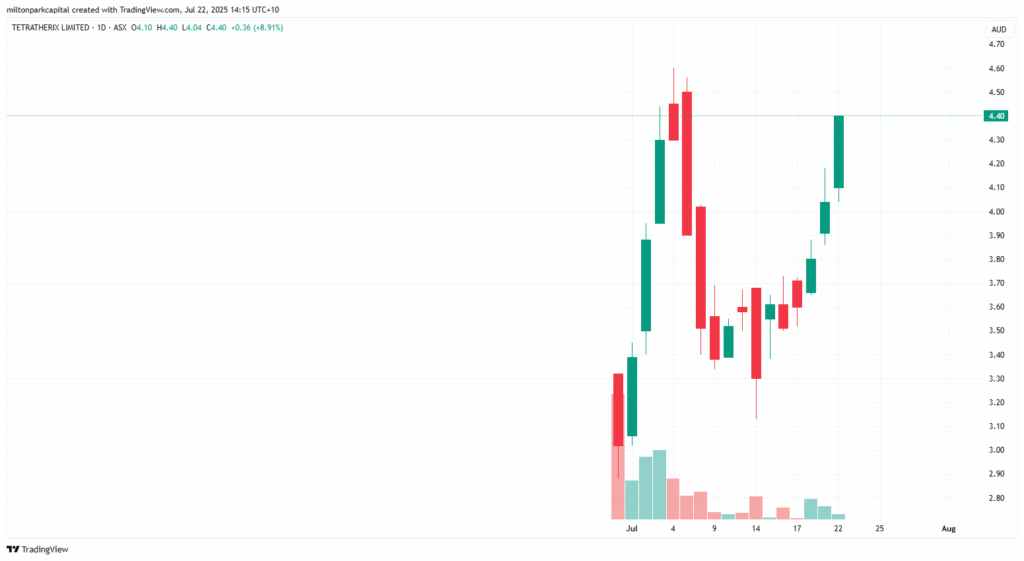
Leading analysts have issued a Speculative Buy on the stock, setting a price target of $5.72. While earnings will remain negative in the short term (expected EPS of -13.2c in FY25 and -21.4c in FY26), the long-term growth story is compelling.
The Bottom Line
Tetratherix isn’t just another biotech stock with a good story—it has a real technology that could dramatically change how we treat injuries, perform surgeries, and protect healthy tissue during cancer care. It’s early days, and there are still clinical and regulatory hurdles to cross, but the building blocks are there.
With smart technology, a well-funded balance sheet, global licensing ambitions, and a huge market in its sights, Tetratherix is one to watch for investors comfortable with a bit of risk and looking for serious long-term upside.
Disclaimer: The recommendation given is general advice only. It does not take into account your personal objectives, financial situation, or specific needs. This information should not be your sole resource when making such decisions. We strongly recommend you to seek the advice of financial, taxation, and legal professionals before finalising any investment decisions.
Past performance is not an indicator of future returns